The short answer
No. The Tower is the clearest negative in the deck and the lists do not argue about it. It is also the card most likely to be read as a warning about timing, since nothing in the image suggests a slow arrival.
Why the card reads that way
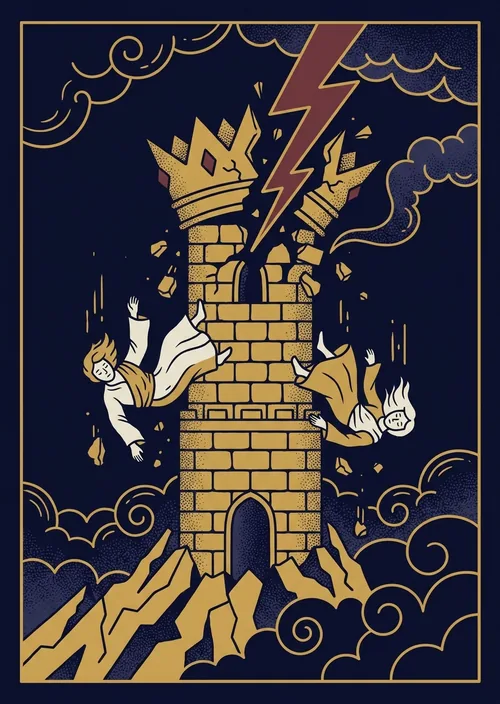
Lightning strikes a tower, the crown blows off it, and two figures fall. There is no ambiguity in the composition and no part of the image that could be read as favourable.
The card is read as sudden collapse, and specifically the collapse of something that was built on a bad footing. That is why the negative is so uncontested. The card's own emphasis, which a verdict discards, is that the structure was already unsound, so what it describes is a revelation as much as a disaster.
Its position in the sequence supports the reading. The Tower follows the Devil, so the trumps place it immediately after the card about an arrangement being tolerated, and readers who teach the pair present the collapse as the consequence of what preceded it rather than as an accident.
Reversed
Reversed, the readings are a collapse delayed, a disaster narrowly avoided, or a change resisted at cost. The answer stays negative in most lists, softened to not yet rather than lifted.
A minority read the reversal as the worst having already passed, which produces a guarded yes.
Where yes-or-no readings come from
Turning cards into verdicts is a modern habit adopted for convenience. The interpretive tradition is descriptive, and it contains no step that licenses a ruling on a closed question.
The polarity assignments differ between readers as well, having been made independently against different decks. The Tower is unusual in attracting near-agreement; most of the deck does not, which is the more important fact about the format.
A better question to ask
Ask what is being held up by something that will not hold, and what you would do first if it failed this week.
The card is direct about that. It is not a schedule, and this site does not present a draw as information about when anything happens. The reframed question turns a frightening card into a piece of contingency planning, which is the useful version of it.