The short answer
Yes. The Lovers is read as affirmative almost everywhere, though the card carries a decision inside it that the single word discards. The word covers the attraction and quietly omits the decision, which is the half of the card the older versions put first.
Why the card reads that way
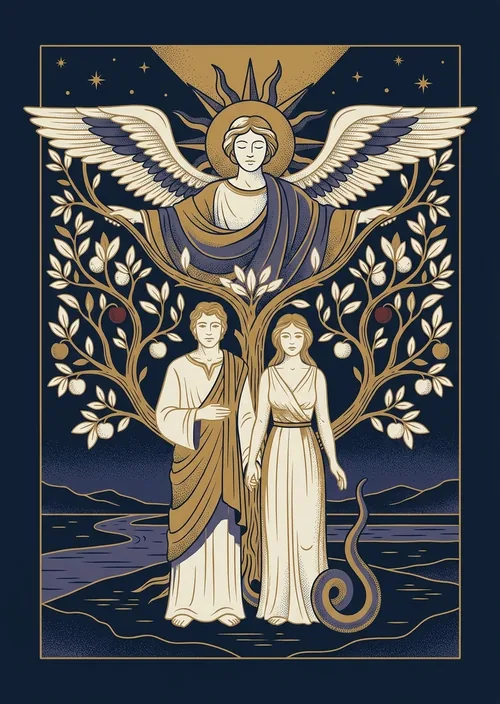
Two figures beneath a winged figure above, a tree on each side, one of them with a serpent in it. The scene is union and it is also a moment of choosing, and the older versions of the card make the choosing the more prominent half.
The yes comes from the harmony in the image: alignment, attraction, two things fitting. What the verdict form loses is that a choice with a serpent in the frame is a choice with consequences attached. Read fully, the card affirms the connection and simultaneously points at what the connection commits you to.
Reversed
Reversed, the readings are misalignment, a choice avoided, or values that do not match underneath the attraction. That gives a no in nearly every list, and it is one of the reversals where readers rarely hedge.
A reversed Lovers is often read as the answer being wrong rather than the timing.
Where yes-or-no readings come from
The binary format arrived long after the imagery did, as a way of handling closed questions in short readings. The interpretive tradition underneath it describes states of affairs, and a state of affairs does not have a truth value.
The assignments vary too, from reader to reader and from deck to deck, because nobody has ever agreed a canonical table. Cards near the affirmative end of one list sit in the middle of another, which is a reasonable thing to know before treating any single verdict as settled.
A better question to ask
Ask what you are actually choosing between, and what the second option costs, rather than whether the relationship works out.
The card is unusually good at the first question and silent on the second, because a picture of a decision cannot report its outcome. The site makes no predictive claim for any draw. What the reframe gives you is the part of the reading that can be checked against real people and real choices.