The short answer
Maybe. The High Priestess is the standard example of a card that will not be pushed into a verdict, and readers usually render it as maybe, wait, or not enough information. Pressed for a single word, most readers will offer wait, and will say plainly that they are inventing the format rather than reporting it.
Why the card reads that way
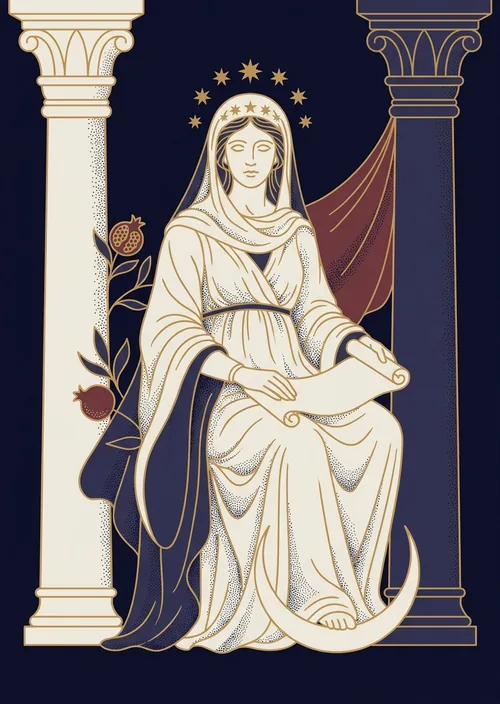
She sits between two pillars with a veil behind her and a scroll half hidden in her robe. The composition is built around something withheld. What the card describes is knowledge that exists but has not surfaced, and a card about the unrevealed cannot honestly be converted into a revelation.
So the maybe is not a hedge produced by an indecisive reader. It follows from the picture. The tradition puts this card on intuition, secrecy and the interior, none of which are the kind of thing that resolves on demand, and forcing an answer out of it means overriding the one thing it is clear about.
Reversed
Reversed, the readings run to secrets kept badly, intuition ignored, or information deliberately withheld by someone else. That tends to push the answer towards no in the lists that insist on one, on the grounds that acting without the missing piece goes badly.
Readers who keep the maybe upright will often keep it reversed too and change only the reason for the delay.
Where yes-or-no readings come from
Yes-or-no tarot is a compression of something that was never binary. The interpretive tradition describes conditions rather than delivering rulings, and the polarity layer was added on top of it, well after the imagery was fixed, to serve questions the cards were not built for.
Because it was added rather than derived, it varies. One reader's yes card is another's neutral, decks with different artwork pull the sense in different directions, and a card like this one exposes the seam by simply refusing to fit the format.
A better question to ask
The reframe here is unusually easy, because the card names its own better question. Ask what you already know about this and have not admitted, or what information is missing that could actually be obtained.
Both of those can be checked against your own circumstances tonight, which is more than a yes could do. The site makes no claim that a drawn card knows anything about your situation, and the value of the exercise is in the question it hands you rather than in any authority behind it.