The short answer
Yes. The Hierophant is affirmative in most lists, but narrowly: it says yes to the conventional path and is quieter about any other. Applied to a question about doing things the accepted way it is a strong yes, and applied to anything else it is barely an answer at all.
Why the card reads that way
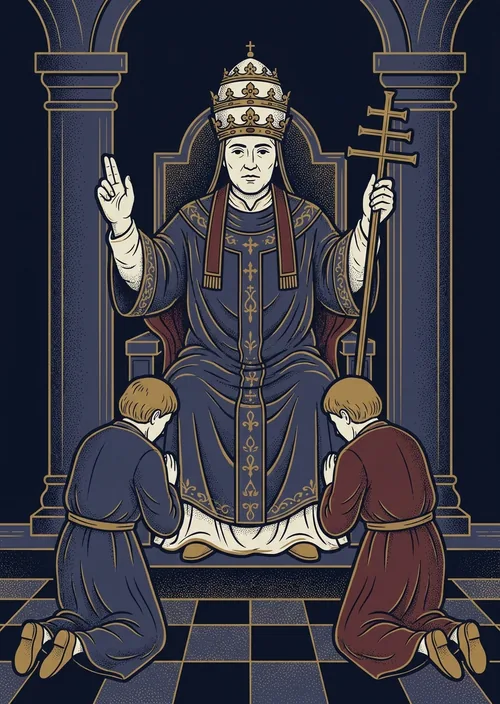
A robed figure between two pillars, two acolytes below, one hand raised in blessing and crossed keys at his feet. The card is institutional. It describes doctrine, teaching and the route that has been sanctioned.
That produces a yes with an unusual amount of fine print. The card endorses the established option, the recognised qualification, the ceremony done properly. Asked about something that runs against the institution it is not affirming, and readers who apply a flat yes to any question at all have generalised past what the picture supports.
Reversed
Reversed, the readings are unorthodoxy, a rule broken deliberately, or an institution that no longer deserves the deference. The polarity does not simply invert; it moves, so the answer becomes yes to the unconventional option and no to the sanctioned one.
Lists that only record yes and no tend to file the reversal as no, which loses that shift.
Where yes-or-no readings come from
Reading a card as a verdict is a modern convenience rather than an inherited technique. What the tradition hands down is a vocabulary of situations, and none of those entries was written to close a question.
The polarity table is also not stable. Compare sources and you will find cards that one treats as clearly affirmative and another leaves neutral, because each list encodes a particular reader's habits with a particular deck rather than anything the cards themselves settle.
A better question to ask
The productive question here is whether the conventional route is the one you are actually being offered, and what it would cost to take it as given.
Phrased that way the card contributes something specific, since orthodoxy and its price are precisely its subject. Phrased as should I, it can only produce a word. This site does not present any draw as knowledge about your circumstances, and the reframed question survives that caveat intact.