The short answer
No. The Hanged Man is negative in nearly every list, though what it describes is suspension rather than refusal. Nothing here is being denied. What the card describes is a question that cannot be settled while the situation is held where it is.
Why the card reads that way
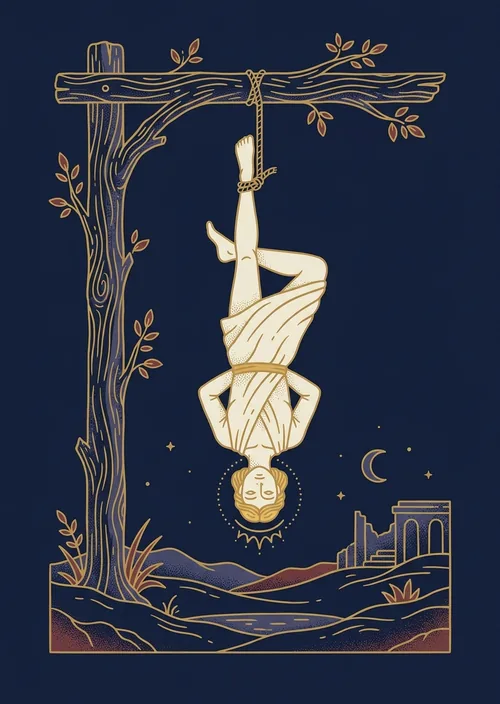
A figure hangs upside down from a wooden frame by one ankle, hands behind the back, with a halo. He is not struggling, and the pose looks deliberate.
Nothing here proceeds. The card is read as pause, sacrifice and a deliberate change of view, and none of those move a question forward, which is where the negative comes from. The important part the verdict discards is that the suspension is chosen and is doing something, so a no drawn from this card is not the same as a door closing.
The pose is also voluntary, which separates this card from the ones that describe being stopped by something external. Nothing is holding the figure that he did not accept. A negative drawn from it therefore describes a choice still being kept in place, and choices can be revisited in a way that obstacles cannot.
Reversed
Reversed, the readings are a pause that has become stalling, or a sacrifice made for nothing. Most lists hold the answer at no and drop the sense that the delay is purposeful.
A smaller group read the reversal as the suspension ending, which turns it into a hesitant yes.
Where yes-or-no readings come from
The yes-or-no reading is a modern layer, put in place to answer closed questions quickly. Nothing in the older interpretive practice produces verdicts; it produces accounts of what is going on.
The layer is inconsistent as well as recent. Polarities were assigned by readers one at a time, against particular decks, and the disagreements between published lists are wide enough that a verdict is partly an artefact of which book you own.
A better question to ask
Ask what the delay is for, and what you can see from this position that you could not see from the usual one.
The card is explicit about both. It says nothing about when the pause ends, and no draw on this site is offered as evidence about timing. The reframe is what makes a single card useful, because it asks the card to describe rather than to rule.