The short answer
Yes. The Chariot answers in the affirmative across most schemes, and the yes it gives is about will held steady rather than about ease. It affirms a course already in motion, and it makes no claim about what happens once the driver's attention goes elsewhere.
Why the card reads that way
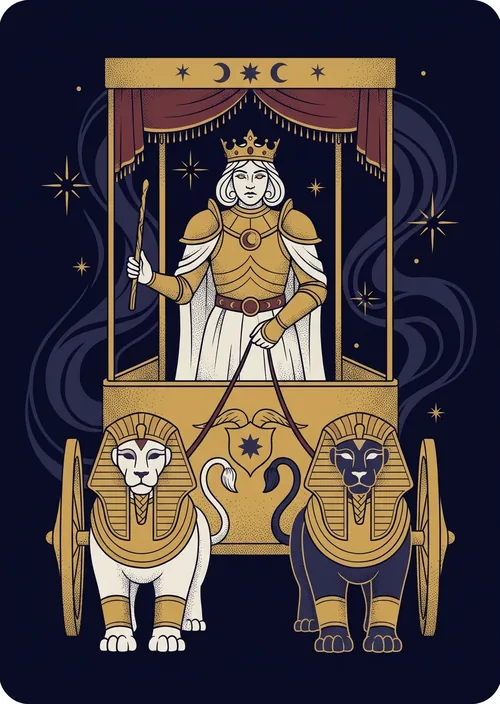
An armoured driver stands in a chariot drawn by two sphinxes facing different ways, and there are no reins. The vehicle is moving because the driver is holding two opposing things together by attention alone.
That is the source of the yes: movement, direction, momentum already under way. The effort is not incidental. The card affirms an outcome that is being produced by sustained control, so the affirmative comes with a condition that most one-word readings drop, which is that it lasts as long as the grip does.
It is also worth saying where the card sits. The Chariot follows the domestic and institutional trumps and precedes Strength, so the sequence puts it at the point where a person has left the structures that were holding them and is running on their own resolve. That placement is part of why readers hear the yes as strenuous rather than lucky.
Reversed
Reversed, the readings are loss of direction, a force pulling the situation apart, or aggression standing in for control. The answer goes to no in most lists, sometimes to a not on this course.
Where the reversal is read as merely stalled rather than derailed, some readers keep a weak yes.
Where yes-or-no readings come from
Verdict reading is a modern add-on. The interpretive material the cards came with is descriptive, and it offers no rule for turning a description into an answer, so someone supplied one to meet demand for quick replies.
Having been supplied rather than derived, it disagrees with itself across sources. Which cards count as affirmative depends on the reader who wrote the list and on the deck they had in front of them, and this is not a defect that better scholarship will fix.
A better question to ask
Ask what two forces you are currently holding together, and what happens to the situation if you stop holding them.
The card is built for that question. It is not built for whether you will win, and no draw on this site is offered as information about that. The advantage of the reframing is that its answer changes something you do, which the word yes almost never does.