The short answer
Yes, conditional on your answering something rather than deferring it. The summons in the picture is not itself the answer. What makes the card affirmative is that the figures in it respond.
Why the card reads that way
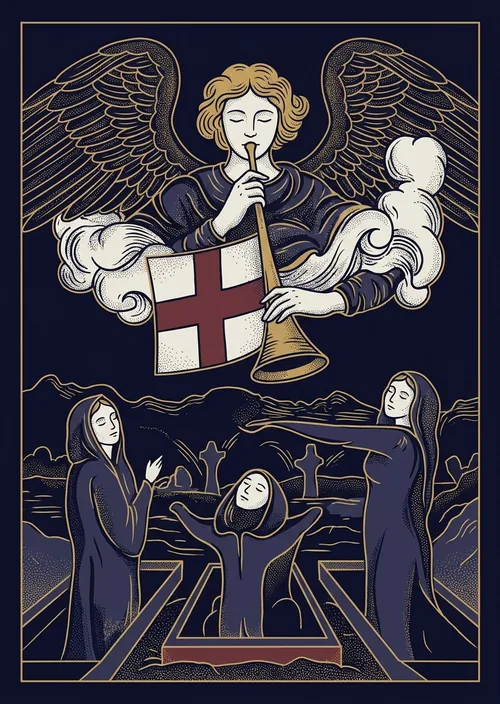
An angel sounds a trumpet and figures rise from open coffins with their arms raised. The card is a summons, and everyone depicted is responding to it.
It is read as awakening, reckoning and a decision that has become unavoidable. The affirmative comes from the response rather than from the summons: the card shows people who answered. Where the question is whether to act on something already recognised, the yes is strong. Where nothing has been recognised, the card is describing a call rather than confirming a plan.
The card is also late in the sequence, second from last, which places it after the difficult trumps rather than before them. Readers use that to argue that what it summons is a reckoning with material already lived through, so the affirmative it gives applies to conclusions rather than to speculation.
Reversed
Reversed, the readings are a call ignored, self-doubt, or a reckoning postponed. That gives a no in most lists, sometimes recorded as not while this is being avoided.
A few readers keep a conditional yes and read the reversal as harsh self-judgement rather than a wrong direction.
Where yes-or-no readings come from
The yes-or-no habit is a modern addition, adopted because closed questions are what people bring. The interpretive tradition works by description, and it offers no procedure for turning a description into a ruling.
What fills that gap is a set of privately compiled tables, which differ. Polarities depend on the compiler and on the deck in front of them, so a verdict is best treated as one reader's practice rather than as the card's meaning.
A better question to ask
Ask what you already know you have to decide, and what you have been doing instead of deciding it.
Judgement is squarely on that and says nothing about the result. Nothing on this site treats a card as evidence about results. The reframe leaves you with something you can act on before the week is out, which the single word does not.