The short answer
A qualified yes, which surprises people who expect the deck's most feared card to be a flat no. The affirmative attaches to the change and not to the continuity, so the same card answers no to anything hoping to stay as it is.
Why the card reads that way
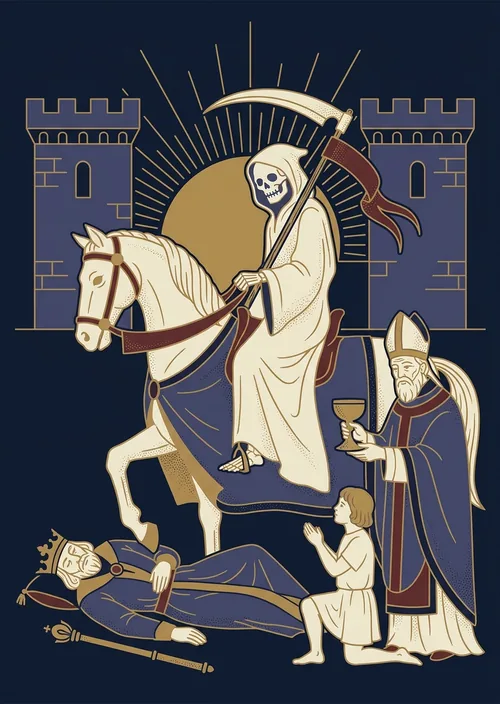
A skeletal rider crosses the card on a pale horse while the figures ahead react in different ways. The rider is moving steadily rather than attacking, and the sun behind is either rising or setting.
The card is read as an ending, a transition, and above all a clearing. Clearing is why the polarity comes out affirmative: something is over, and the space that follows is the card's real subject. The qualification is that it affirms change rather than continuity, so if the question was whether something will carry on unaltered, the same card answers no.
The varied reactions of the figures in front of the rider are the part of the card that survives translation into a verdict least well. The ending in the picture is fixed and what differs is how it is met, so the card's own emphasis falls on conduct rather than on whether the news is good.
Reversed
Reversed, the standard reading is holding on past the ending, which extends it rather than preventing it. That drops the answer to no, or to not while this continues.
The less common reversed reading, a stalled change finally moving, would restore the yes. The surrounding cards are what decide between them.
Where yes-or-no readings come from
Reducing a card to a verdict is a modern practice built for speed, and this card shows the cost of it plainly, since the one-word answer is the opposite of what most people assume before they read the entry.
The polarity tables also disagree, having been compiled separately by readers with different decks and different instincts. Death sits anywhere from qualified yes to neutral to no depending on the source, which is a reasonable argument for not treating any one of them as authoritative.
A better question to ask
Ask which part of this has already ended in fact while still being maintained in form. That question is answerable, uncomfortable and specific.
Whether the ending is good news is not something a card can establish, and nothing here is presented as a prediction. What the reframing preserves is the card's actual contribution, which is a prompt about where effort is still being spent.